
Seoul Taste began in our family kitchen, where we slow-ferment small batches to coax deep, complex flavor. Using time-honored techniques, we taste every batch to ensure crisp texture, balanced heat, and naturally probiotic goodness.
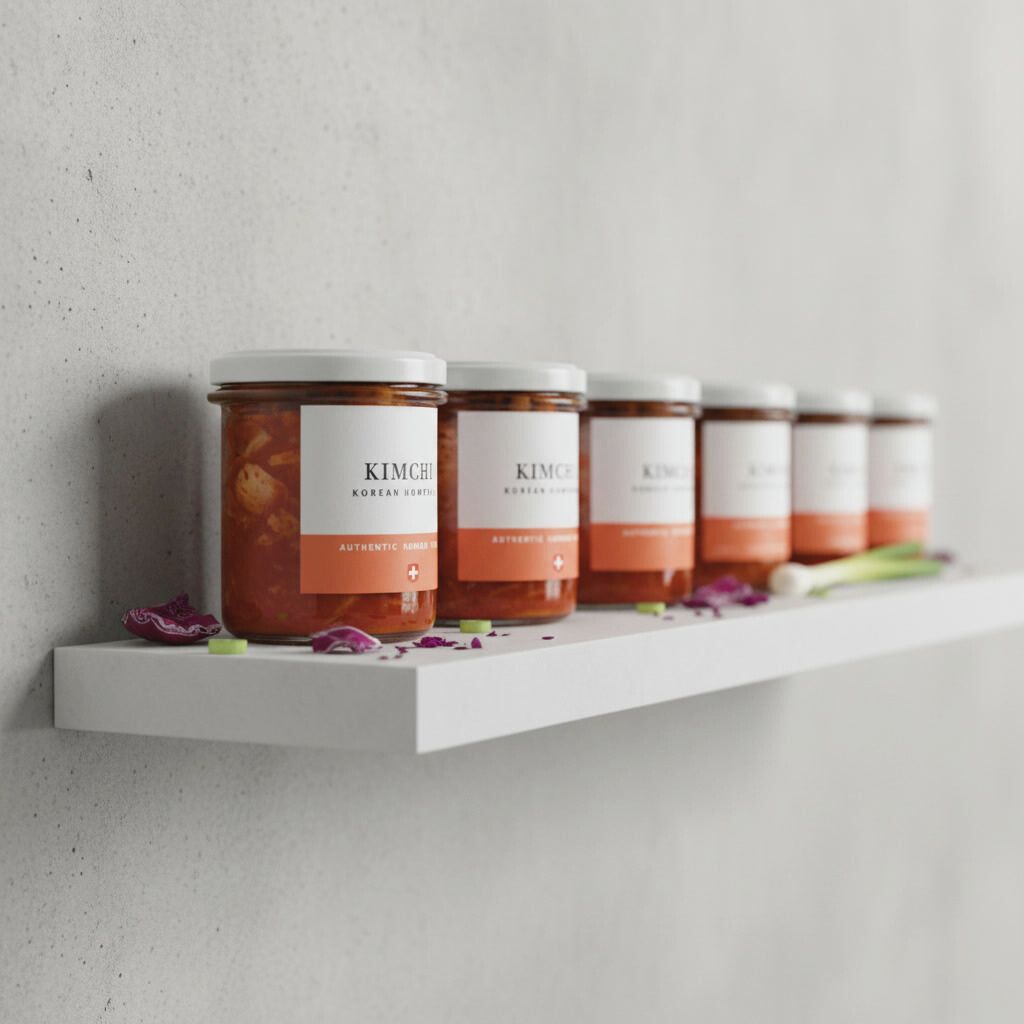
How to Make Kimchi

Think of kimchi as the soul of Korean cuisine, it’s much more than just a side dish. It’s a complex, living food that hits almost every taste bud at once
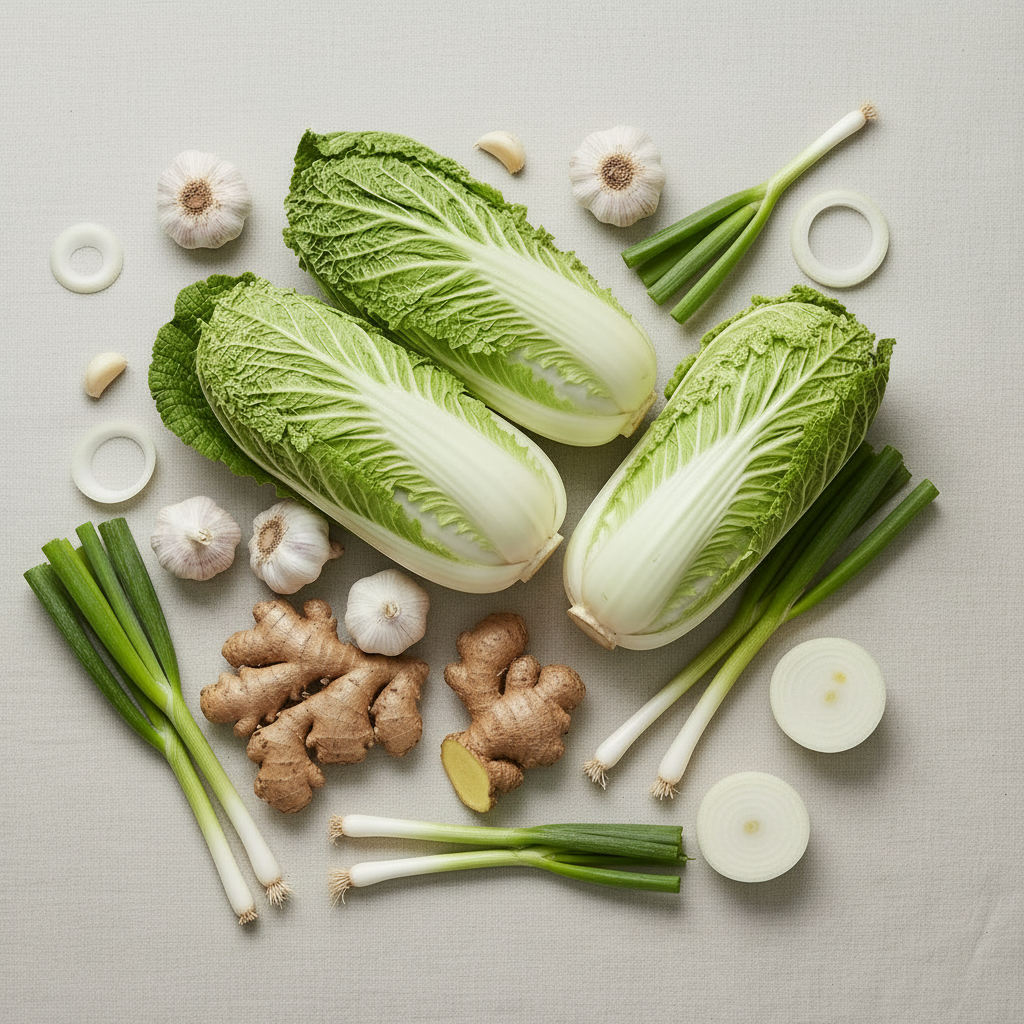
A bright, high-key overhead shot of fresh kimchi ingredients neatly arranged on a light beige background: halved and quartered napa cabbages, whole garlic cloves, slices and chunks of fresh ginger, white and light-green spring onions, and a few thinly sliced onions. No radishes or fruit. The style should feel fresh, clean, and modern, with soft shadows and vivid but natural colors that match a light beige and fresh orange brand palette.
Step 1:
We start with the heart of the dish, fresh and crisp napa cabbages, and garlic, ginger, and onions, etc.
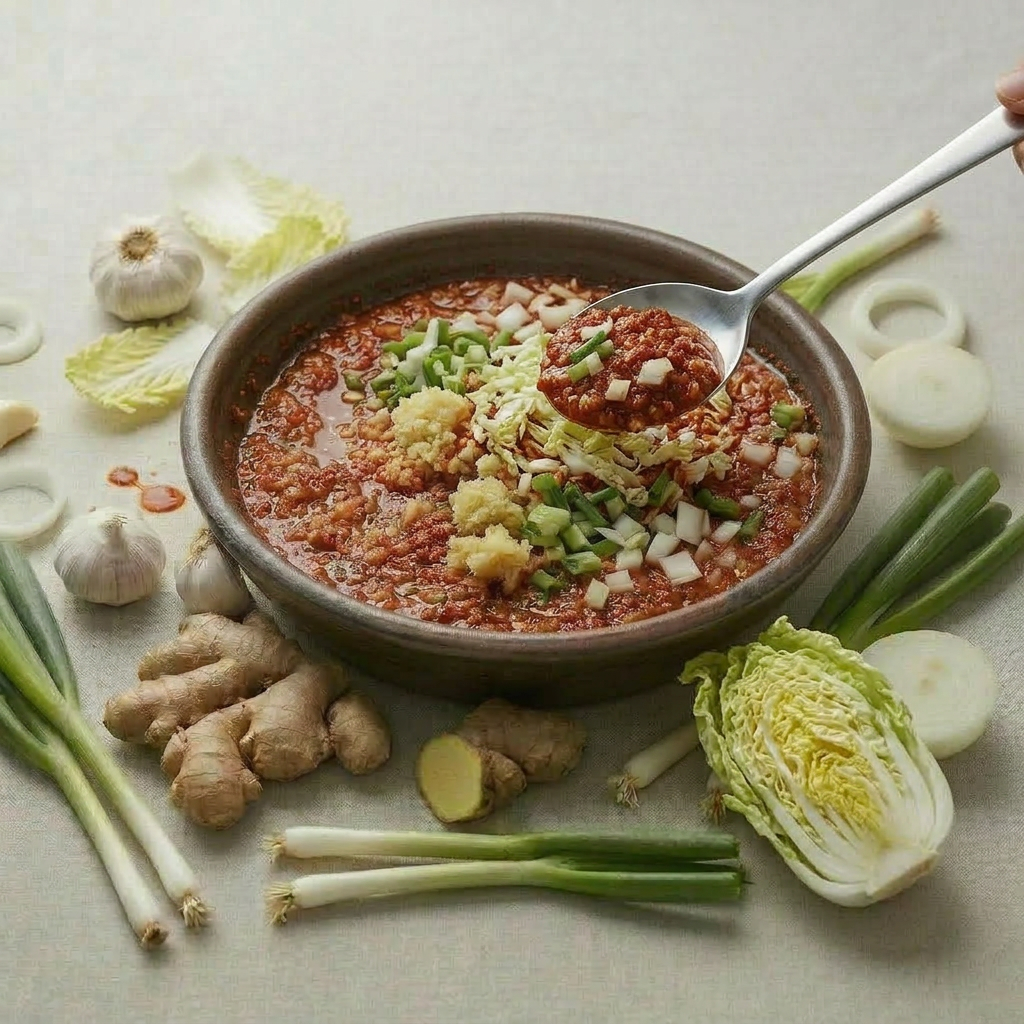
A bright, high-key overhead shot of fresh kimchi ingredients neatly arranged on a light beige background: halved and quartered napa cabbages, whole garlic cloves, slices and chunks of fresh ginger, white and light-green spring onions, and a few thinly sliced onions. No radishes or fruit. The style should feel fresh, clean, and modern, with soft shadows and vivid but natural colors that match a light beige and fresh orange brand palette.

Step 4.
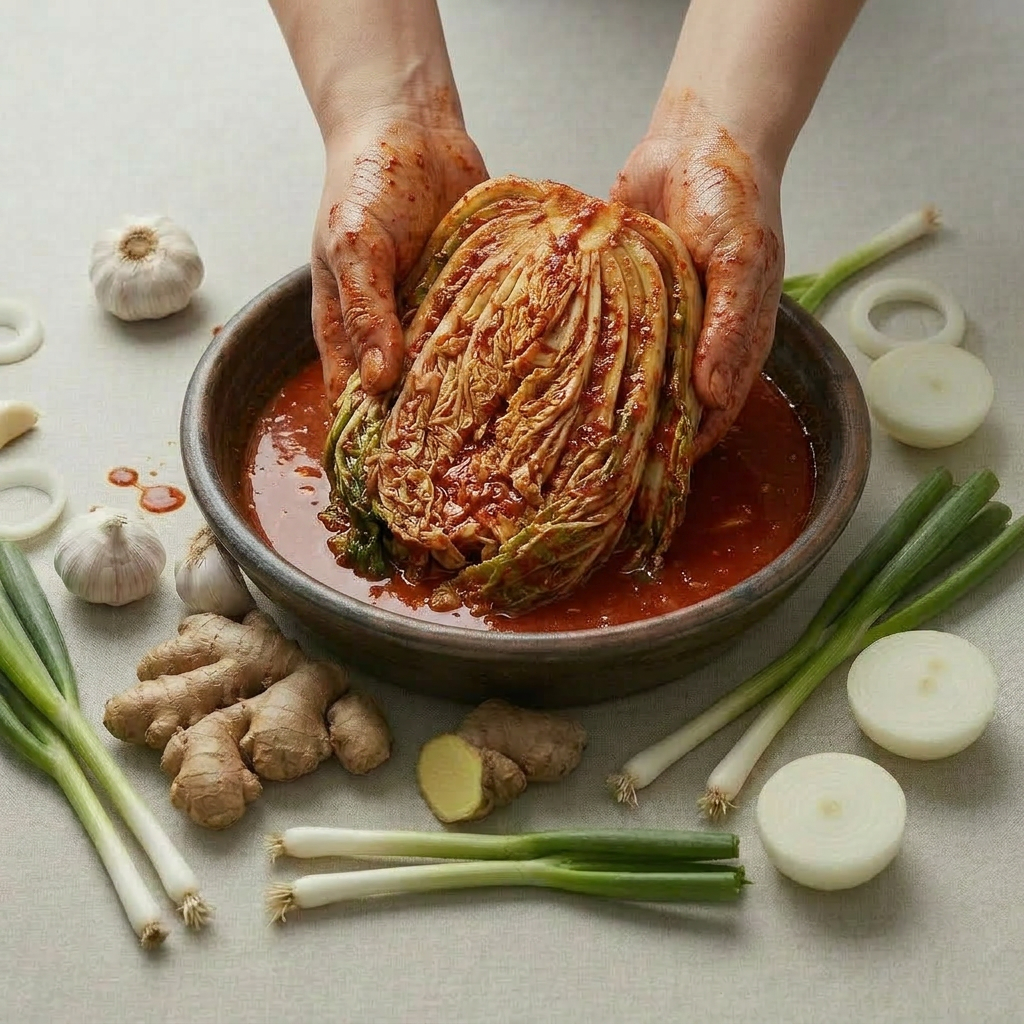
After rinsing the cabbage in cold water, we coat it in our signature Yangnyeom sauce, with a blend of garlic, ginger, onions, Gochugaru, etc.
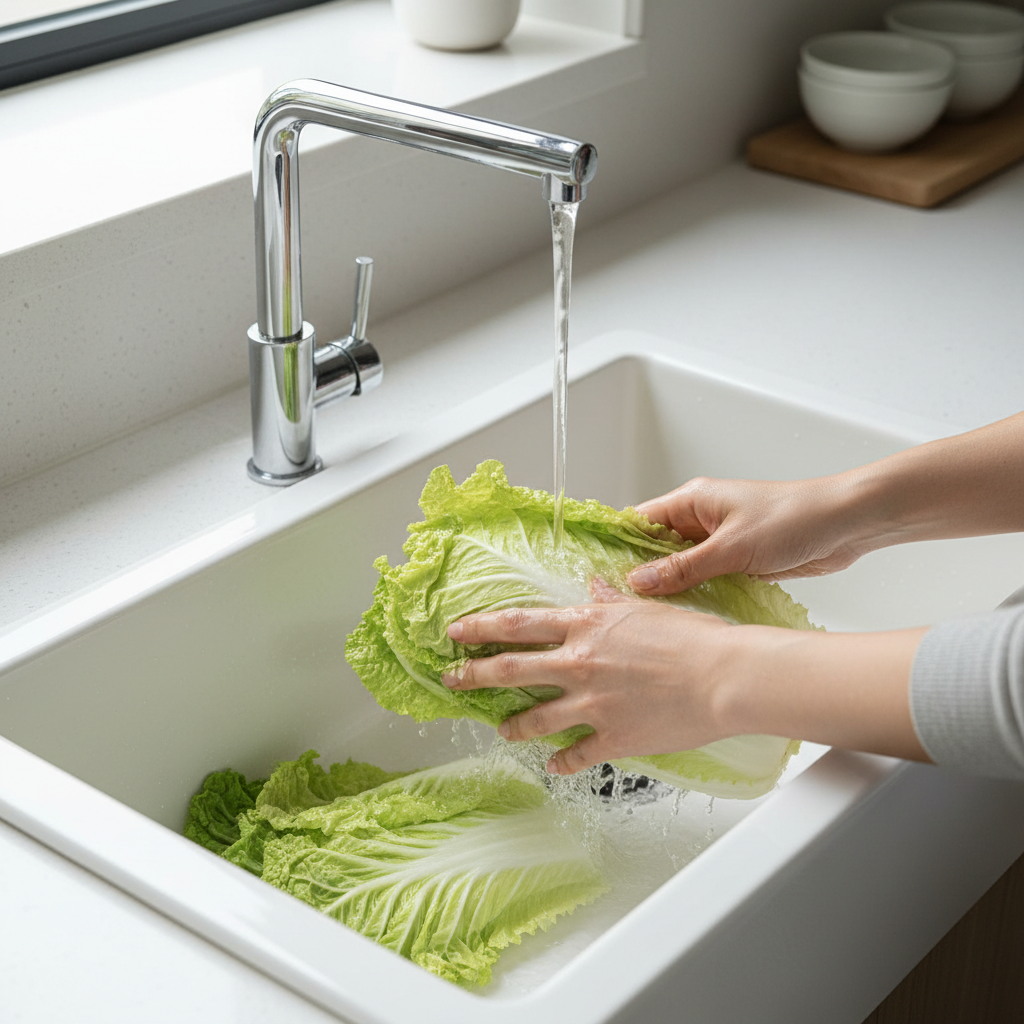
Bright, high-key overhead image of fresh napa cabbage leaves being washed in a clean kitchen sink or large basin, water running over the leaves, hands gently rinsing and handling the cabbage. Light, neutral background with a clean, modern look in the style of the existing Seoul Taste imagery.
Step 2.
Wash the cabbage thoroughly, then cut into bite-sized pieces that hold seasoning and stay perfectly crunchy.
A bright, high-key overhead shot of fresh kimchi ingredients neatly arranged on a light beige background: halved and quartered napa cabbages, whole garlic cloves, slices and chunks of fresh ginger, white and light-green spring onions, and a few thinly sliced onions. No radishes or fruit. The style should feel fresh, clean, and modern, with soft shadows and vivid but natural colors that match a light beige and fresh orange brand palette.

Step 5.
Each leaf is carefully coated by hand with Yangnyeom and green onions, ensuring balanced flavor in every bite.
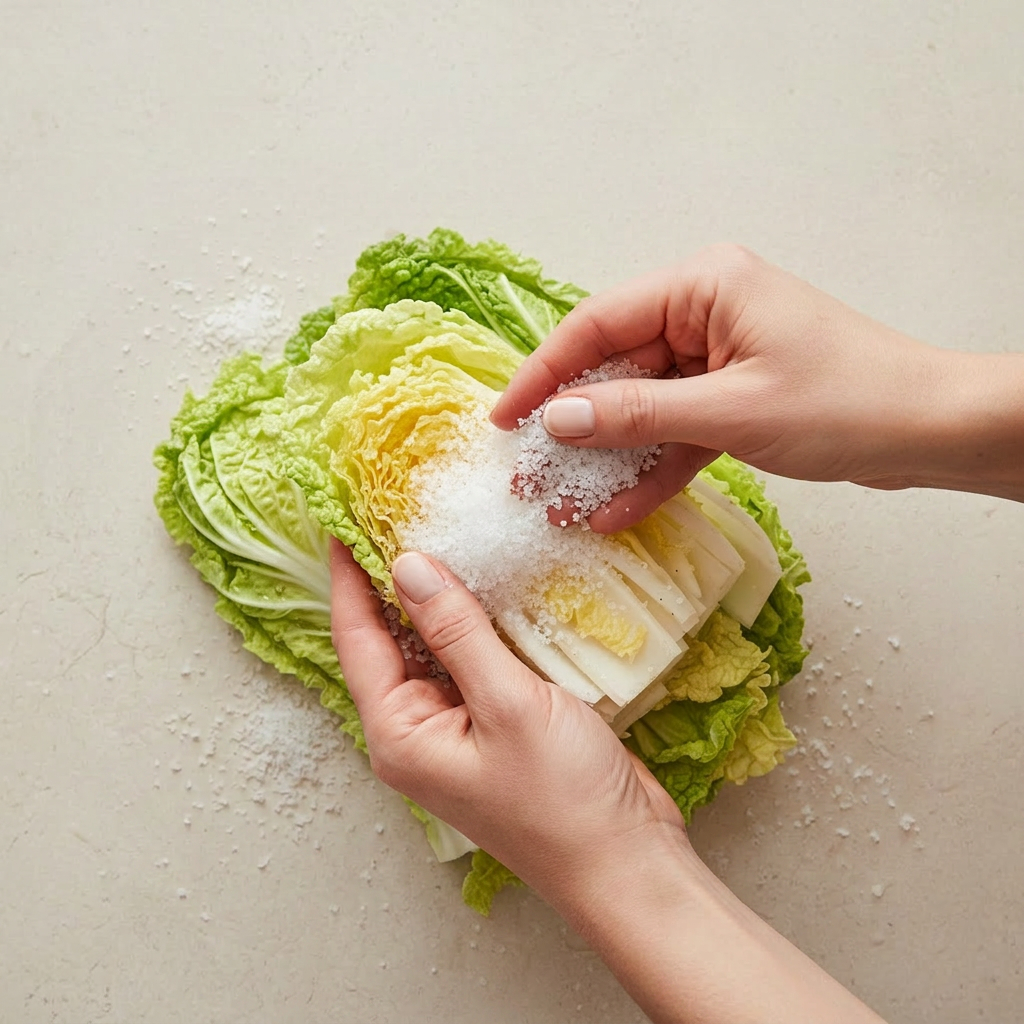
Bright, high-key square image of napa cabbage leaves and other kimchi vegetables being layered with coarse sea salt on a clean, pale beige surface. Hands are sprinkling large grains of sea salt between the cabbage layers. Soft, even daylight, minimal shadows, vivid but fresh red-orange and green tones that feel light, lively, and appetizing, matching the existing Seoul Taste process imagery.

Step 3.
Sea salt is spread over the cabbage to draw out excess moisture, making it pliable while preserving its crunch.
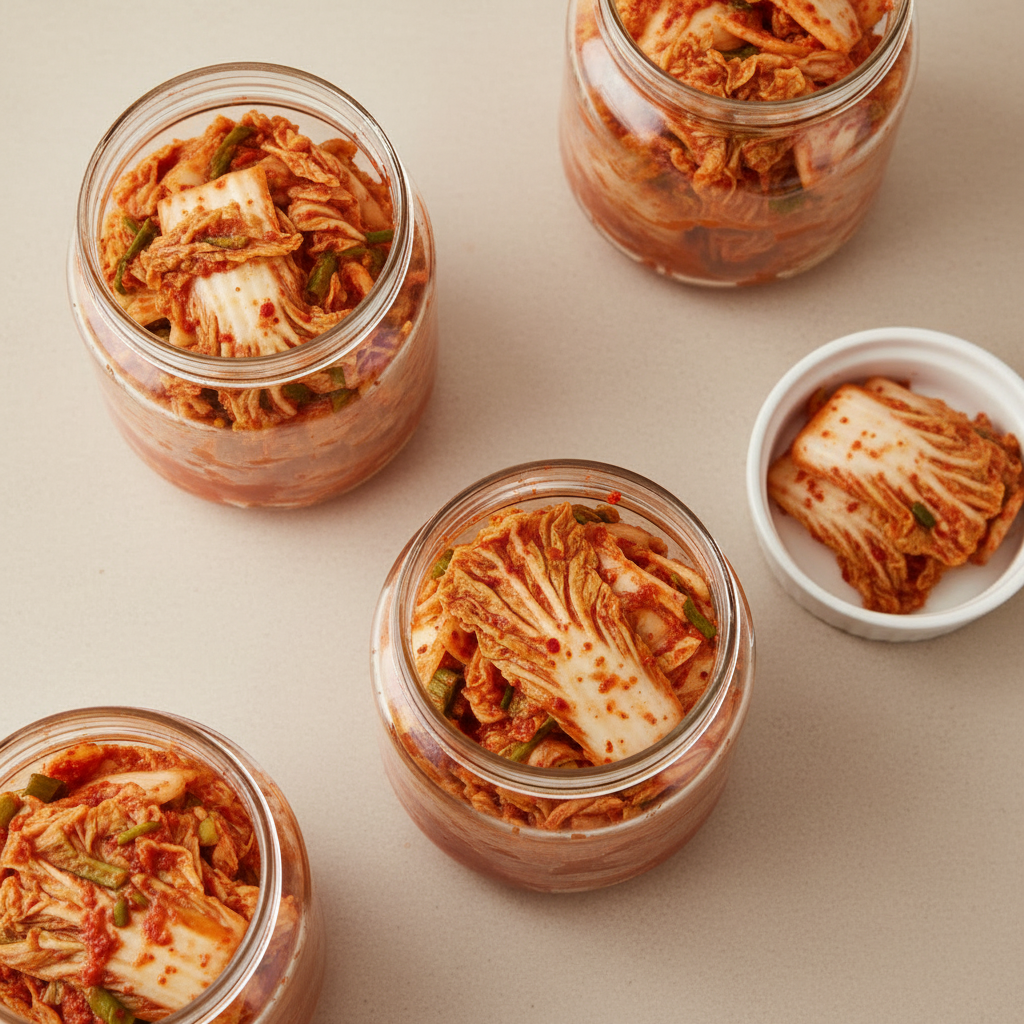
Bright, high-key overhead image of finished fermented napa cabbage kimchi neatly packed in clear glass jars and one small white serving dish, styled on a light beige surface. Soft, even daylight with minimal shadows and vivid but fresh red-orange kimchi tones that match the existing Seoul Taste step-by-step imagery.

Step 6.
It then undergoes natural fermentation, where beneficial probiotics develop, creating that iconic tangy and complex flavor.